

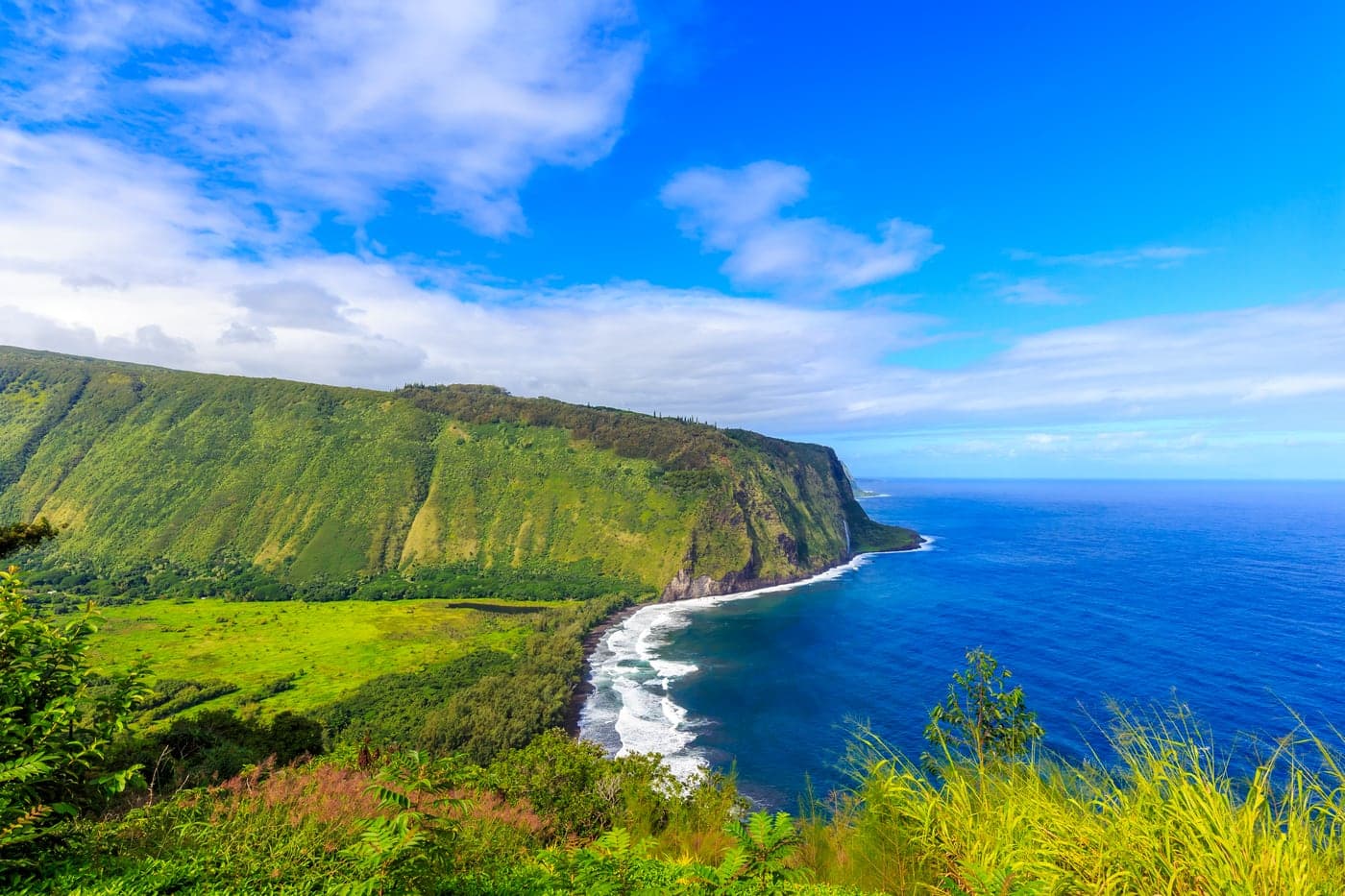
Waipi‘o Valley
The Valley of the Kings. Lookout access for most; the valley floor has its own access realities and should never be assumed.
Waipi‘o means curved water, and the valley is known as the Valley of the Kings for good reason: it was a seat of power and a residence of Hawaiian ali‘i, and it has been farmed, maintained and revered continuously for centuries. Taro is still grown on the valley floor. Walls of green rise close to a thousand feet on either side, waterfalls come off the back of it, and a black sand beach closes the mouth. Almost everyone experiences it from the lookout at the end of Highway 240, which is one of the great views in the state and costs nothing to stand at. Access down into the valley itself is a serious matter, steep and restricted, and it should never be assumed from a map or a listing. What surrounds the valley, along the rim and back toward Kukuihaele, is where people actually buy, and they buy for that view and that quiet.
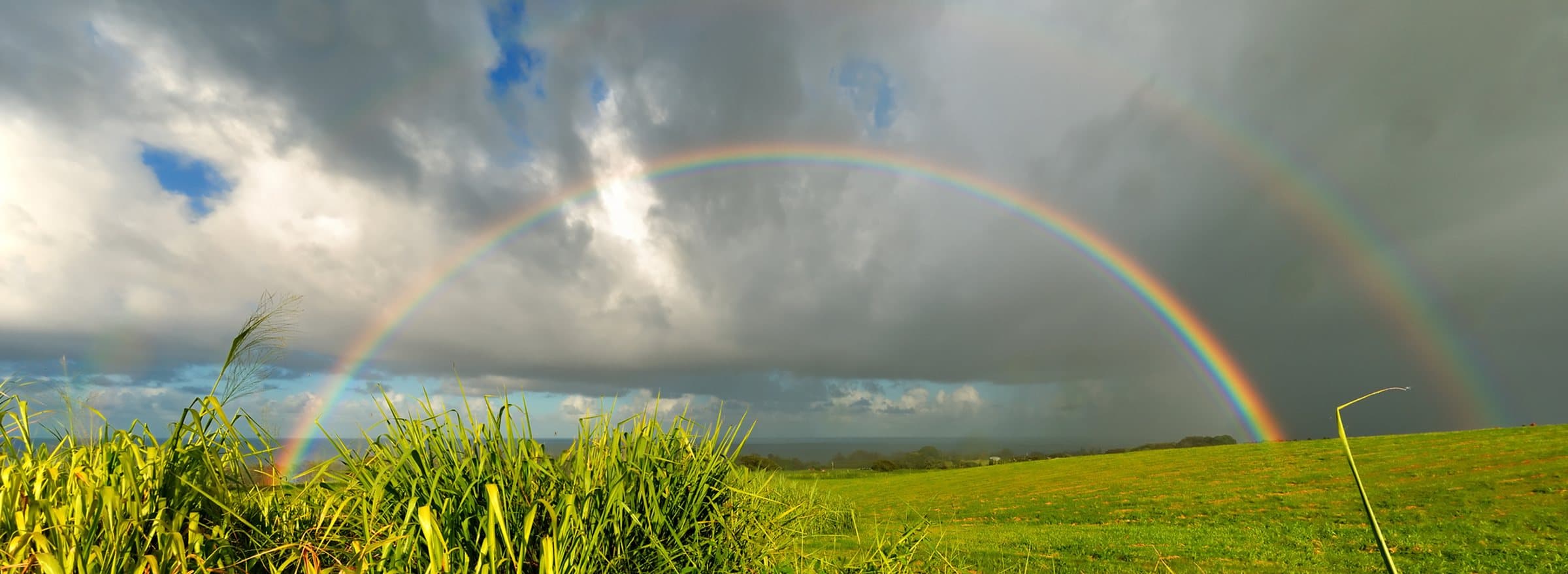
Kukuihaele
The last village before the Waipi‘o lookout. Small former plantation settlement, some with ocean and valley views.
Kukuihaele means traveling light, and it is the last village before the road ends at the Waipi‘o lookout. About 280 people live there, which makes it one of the smallest named communities on the coast. It began as a plantation settlement and still reads like one, a cluster of older houses along narrow lanes with ocean on one side and pasture climbing behind. The location is the whole draw: valley and ocean views from a place where you can walk to the lookout, and a real village rather than a subdivision. It is wet, green and cool by Kona standards, and things grow here without being asked twice. Honoka‘a is ten minutes back up the road for anything the village does not have.
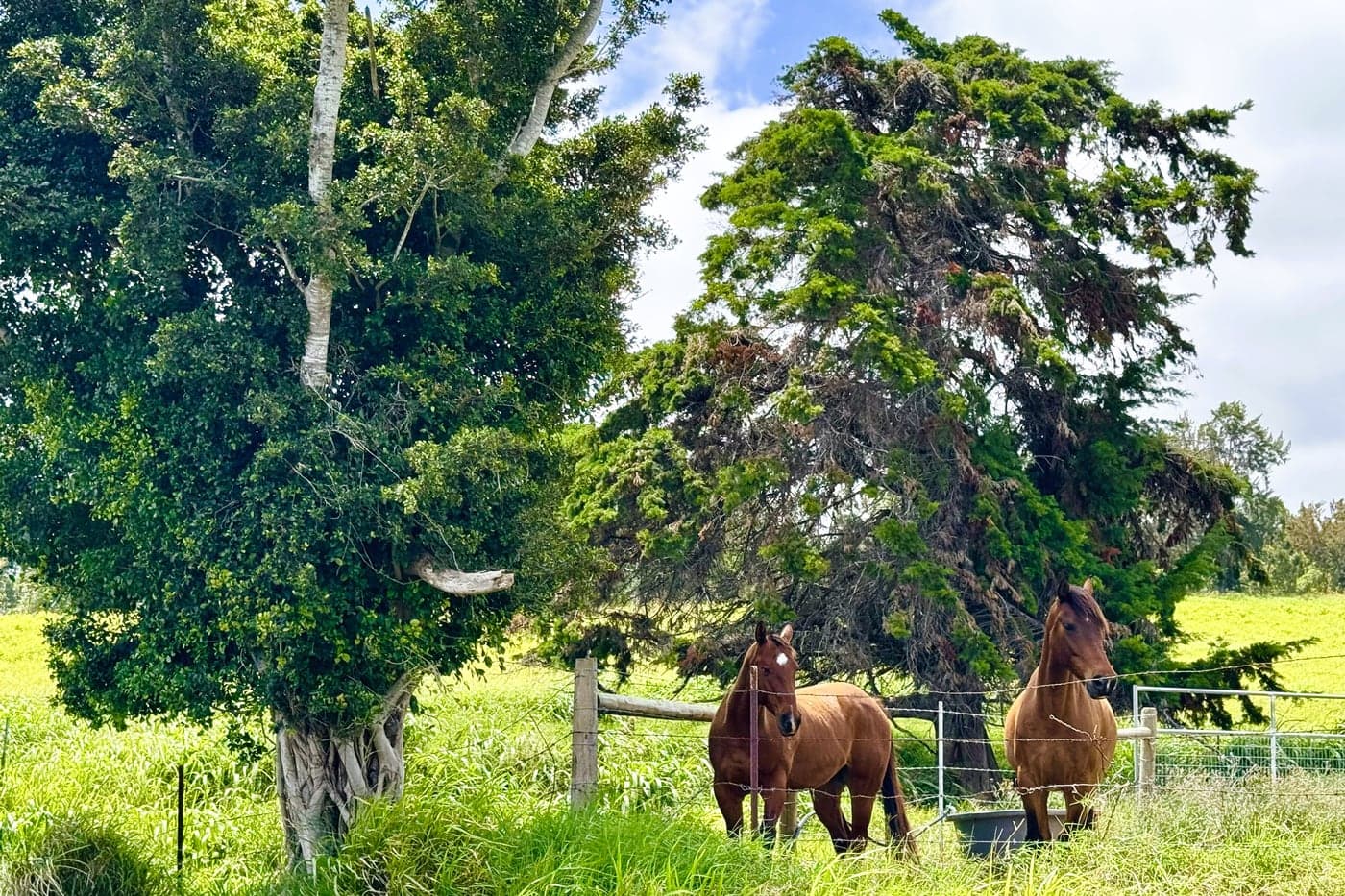
Honoka‘a
Historic main street, the People’s Theatre, K-12 public school, groceries and a hardware store. About twelve minutes to Waimea.
Honoka‘a is the largest town on the Hamakua Coast at about 2,700 people, and the one everything else on the coast orbits. Its economy ran on sugar from 1873 until the Hamakua Sugar Company closed in 1994, and the town has spent the decades since rebuilding around diversified agriculture: macadamia, coffee, papaya, tea, cacao, cattle and timber all come off this coast now. The historic downtown along Mamane Street survived intact, including the People’s Theatre, built in 1930 by the Tanimoto family and still in use. Coming down from Waimea, Honoka‘a offers the first unobstructed view of the Pacific, which is why it is described as the gateway to the coast. It has groceries, a hardware store, K-12 public school, restaurants and galleries, so it works as a real town rather than a waypoint. Waimea is about fifteen minutes west and Hilo about forty-five southeast, and a good number of residents commute one way or the other.
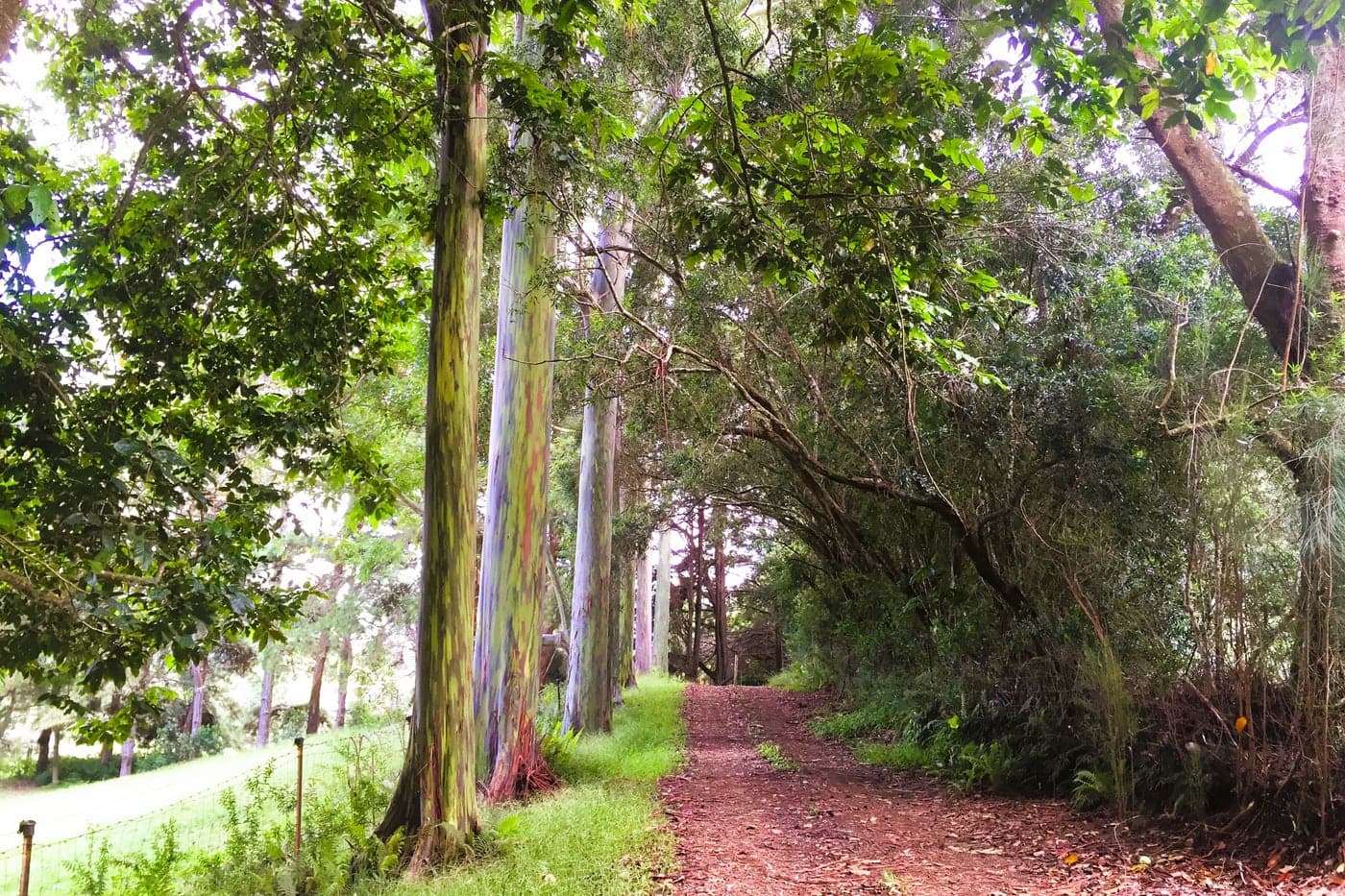
Pa‘auilo
Former mill town on the highway. Larger agricultural parcels and ocean views from the upper lots.
Pa‘auilo is a former mill town on the highway between Honoka‘a and Laupahoehoe, with a little over 600 residents. Like most of this coast it was built by sugar and has since turned to agriculture on a smaller scale, with larger parcels running back from the highway toward the mountain. The upper lots carry long ocean views across what used to be cane land, while the lower ones sit closer to the gulches. It is quiet to the point of being sleepy, with a small store and a school and not a great deal else, and for the people who choose it that is precisely the appeal. Rainfall is generous and the ground is fertile, so smallholdings here genuinely produce rather than merely look agricultural. Honoka‘a is about ten minutes northwest.
‘O‘okala
Small plantation-era community between Pa‘auilo and Laupahoehoe. Rural roads, green cliffs and ocean views.
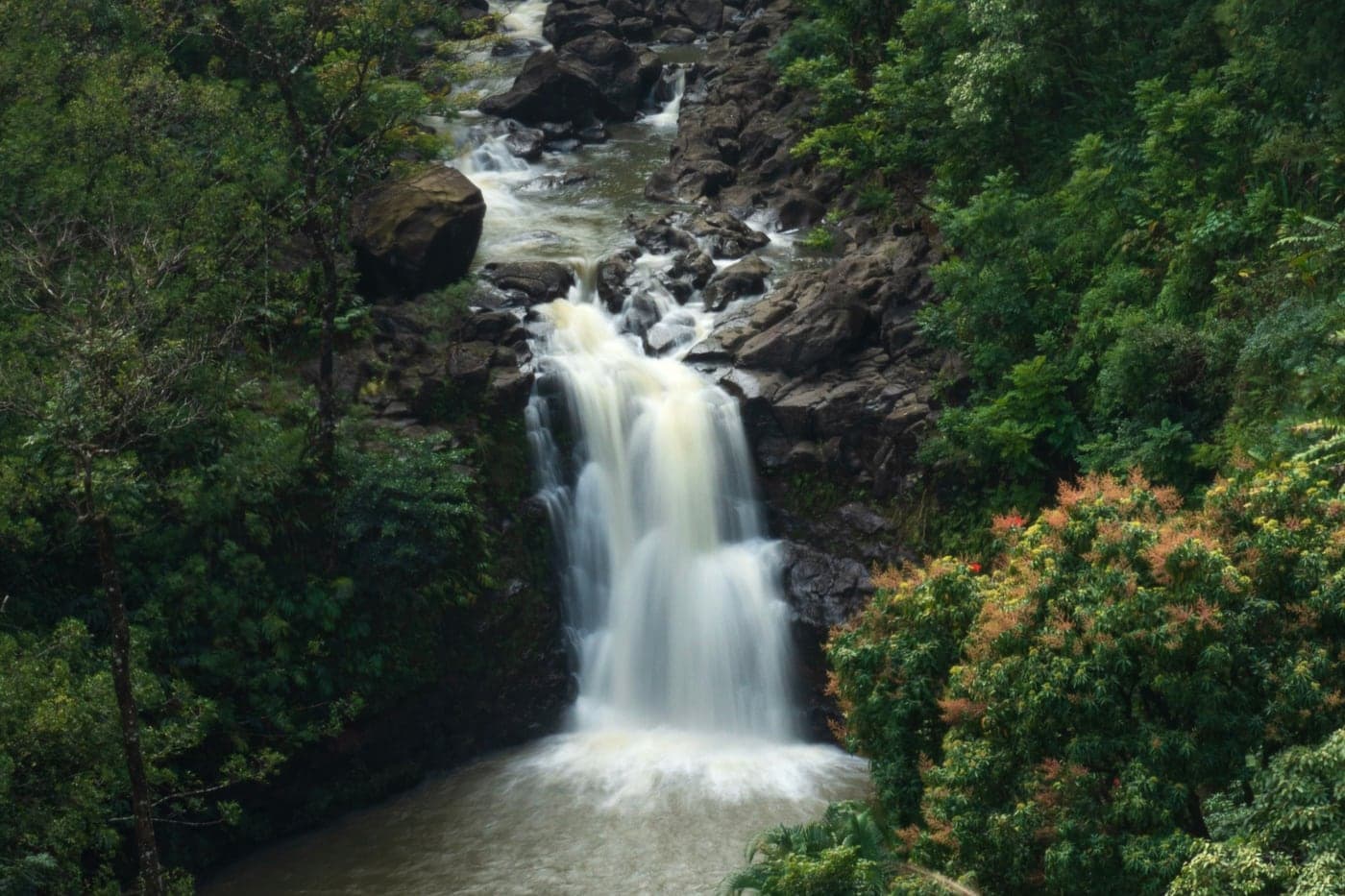
‘O‘okala sits at about 370 feet on Highway 19, a small plantation-era community between Pa‘auilo and Laupahoehoe. It is one of the older camp settlements on the coast, and its name was only formally standardized by the Board on Geographic Names in 2000, which says something about how quietly it has carried on. The houses are modest and largely original, the roads are rural, and the land falls away into steep green gulches on either side. The coastline here is cliff rather than beach, so the ocean is something you look at rather than swim in. It is deeply rural, it rains a great deal, and it is priced accordingly. For a buyer who wants the Hamakua Coast without a town attached, this is close to the purest version of it.
Laupahoehoe
One of the two largest settlements on the coast historically. Laupahoehoe Point, deep gulches and heavy rain.
Laupahoehoe means lava tip, named for the angular cape of smooth pahoehoe lava the community was built on, and about 580 people live there. It carries the coast’s hardest memory. On the first of April 1946 a tsunami generated by an earthquake in the Aleutians struck the islands, and the school at Laupahoehoe Point was inundated, drowning twenty-four people, sixteen of them schoolchildren along with four teachers and four residents. A monument to them stands at the point today and the school was rebuilt on higher ground. The setting is dramatic even by Hamakua standards, with deep gulches to either side, heavy rain, and the point running out into open water. It is a close community with a long memory, and Hilo is about twenty-four miles southeast.
Papa‘aloa / Ninole
Gulch country near Laupahoehoe. Waterfall parcels and genuinely rural living.
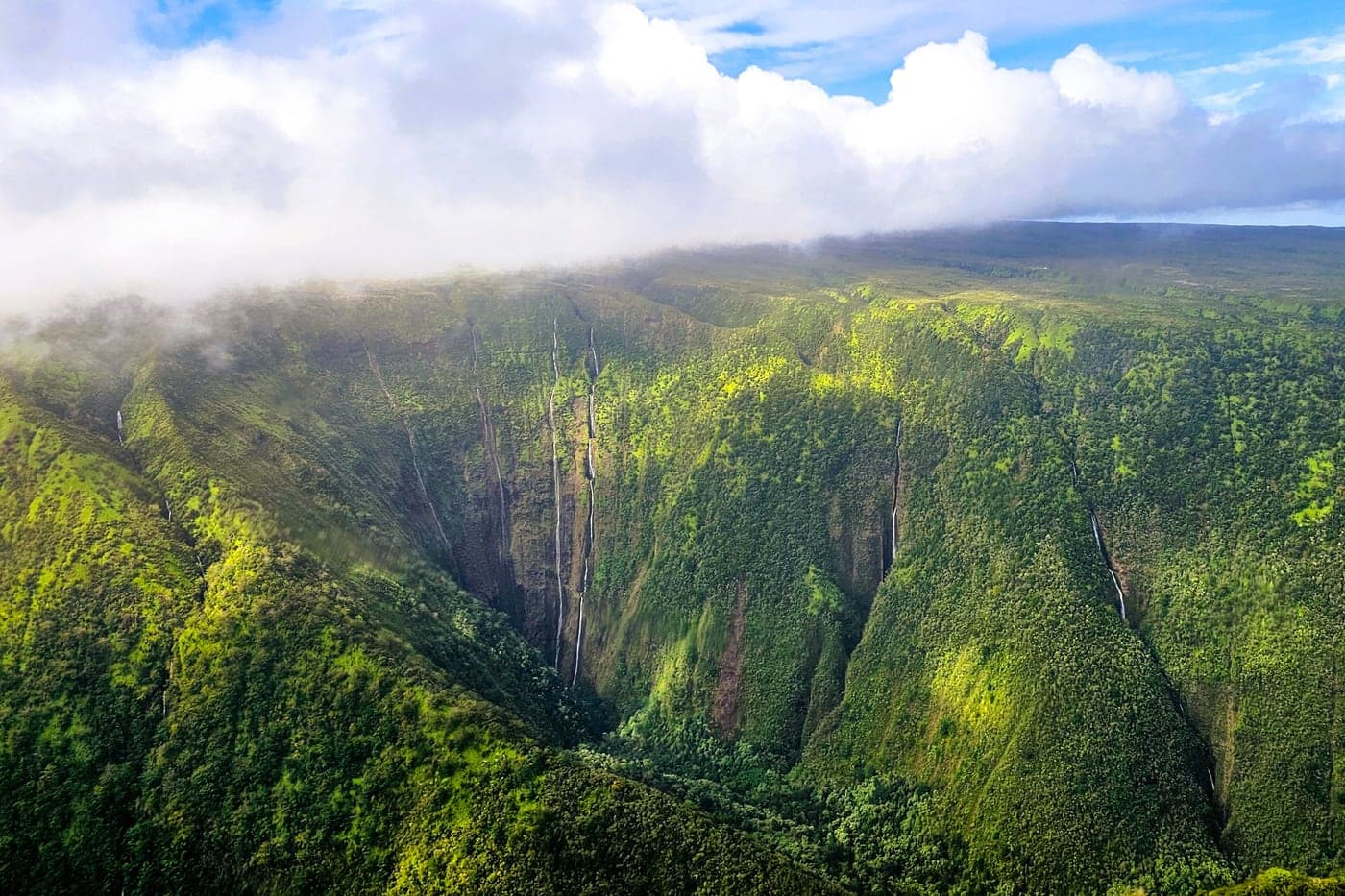
Papa‘aloa and Ninole sit at about 300 feet at the southeastern end of the coast, closer to Hilo than to Waimea. This is gulch country: three streams run around and through Papa‘aloa alone, and the ground between them is folded into steep, wet, green ravines. That geography is why parcels here occasionally come with a waterfall on them, which sounds like marketing language until you look at a map. The settlements themselves are small and plantation-era, with a general store and very little commercial activity. Rainfall is high and consistent, so gardens, fruit trees and forest all do exactly what you would hope they would. People who buy here are choosing genuinely rural living within about forty minutes of Hilo’s shops, hospital and airport.