
Hualalai / Kona Village
Ka‘upulehu. The Four Seasons at Hualalai and the rebuilt Kona Village, members-only golf, ten minutes north of the airport.
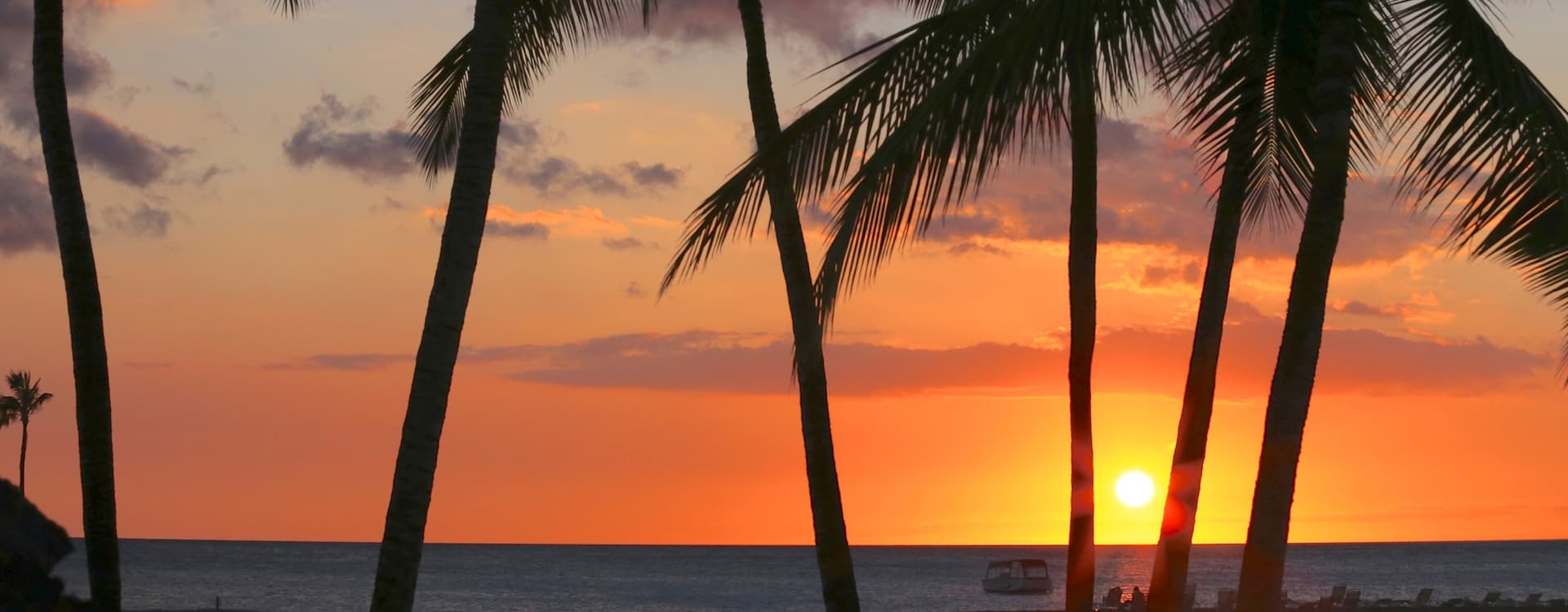
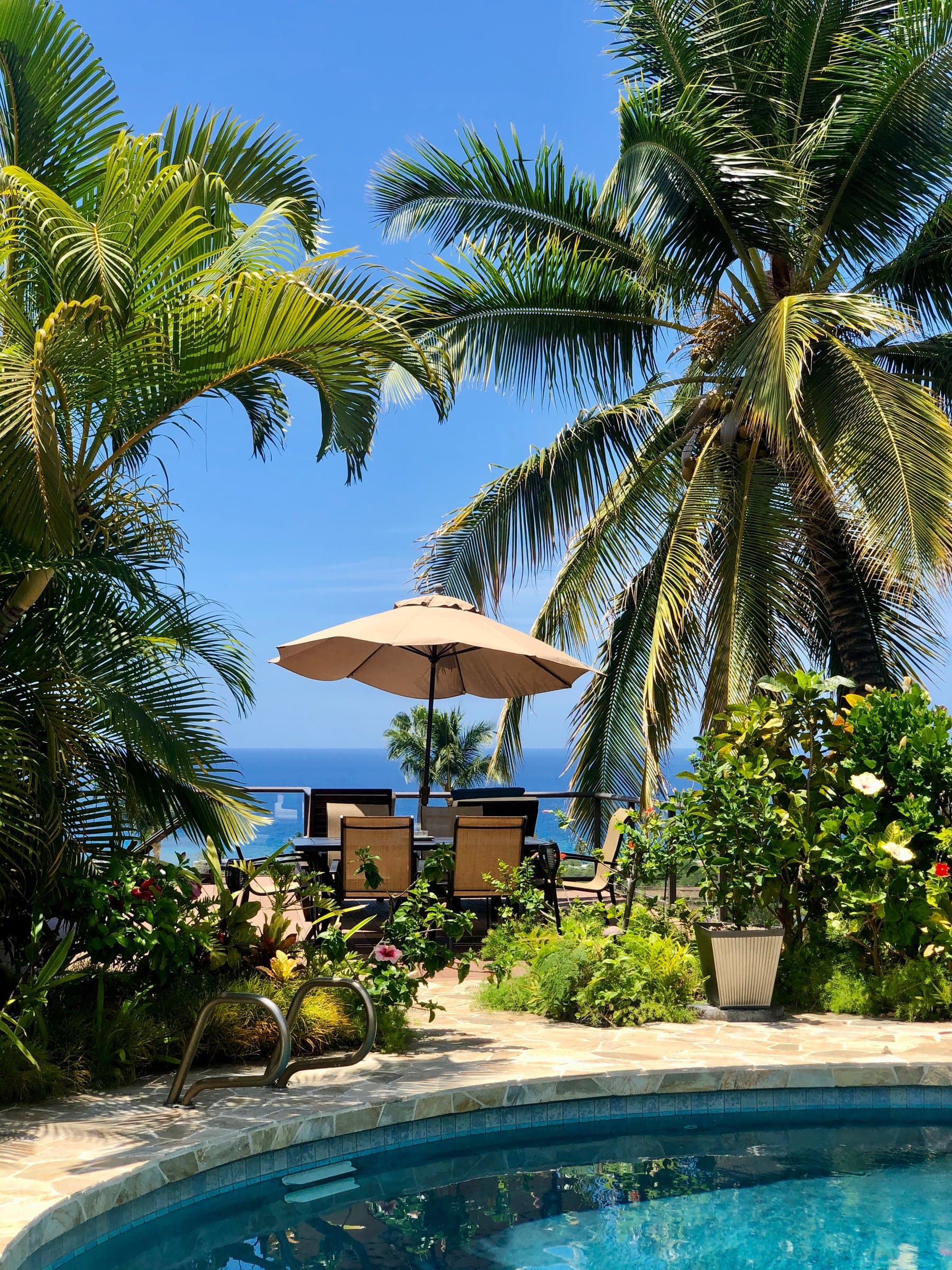
Hualalai and Kona Village occupy Ka‘upulehu, one of the most historic stretches of the entire Kona coast, about ten minutes north of Kona International Airport. Both sit on black lava at the shoreline, with the Four Seasons at Hualalai and the rebuilt Kona Village anchoring a community of ultra-luxury homes, members-only golf and private club facilities. What sets Ka‘upulehu apart is how deliberately its past is kept: the Kalaemano Cultural Reserve and Interpretive Center covers more than 200 acres and exists to share the area’s archaeology and history rather than to build on it. Under the ahupua‘a system this land ran from the sea to the upland slopes, with fishing as the mainstay of the district and everything else grown on the ground between. The visual contrast is the appeal, jet-black lava against turquoise water and green fairway. Prices sit at the very top of the island market, and the buyer is usually someone who wants a club and a coastline rather than a town.
Kukio
A private equity beach and golf club rather than a resort, taking in Kukio, Manini‘owali and Ka‘upulehu. No hotel inside it.
Kukio is a private residential equity club rather than a resort, and the difference matters: there is no hotel inside it. It lies about seven miles north of Kona International Airport and takes in three neighborhoods, Kukio, Manini‘owali and Ka‘upulehu. The Kukio neighborhood itself covers roughly 675 acres with about 143 home sites, many of them a short walk from the ten-hole short course. Membership carries beach club and golf privileges, and the culture is built around families using the place rather than around visitors passing through it. The shoreline is among the finest on the island, with Manini‘owali fronting the white sand at Kua Bay. It is quiet, extremely private, and about as exclusive as Hawaii Island gets.
Kaloko Mauka
Three to five acre parcels between roughly 1,600 and 3,000 ft on the slope of Hualalai, larger again above that. Ohia forest and cool nights.
Kaloko Mauka climbs the slope of Hualalai directly above Kailua-Kona, running from about 1,600 feet up past 3,000 and, at the very top, toward 5,000. Parcels are mostly three and five acres through the middle elevations and ten to twenty acres higher up, which makes it one of the few places near town where keeping horses or other animals is straightforward. The change in climate as you climb is dramatic: the upper reaches are genuine ohia rainforest, and hydrangeas and rhododendrons thrive there in a way they never would in the heat below. Warm days and properly cool nights are the pattern, with cloud usually arriving in the afternoon. Town is fifteen to twenty-five minutes downhill depending on where you sit, so this is rural living without real isolation. Buyers here trade ocean views and constant sun for land, green and quiet.
Kona Palisades
Residential slope north of Kailua-Kona. Ocean views over the lava fields, minutes from town, the airport and the harbor.
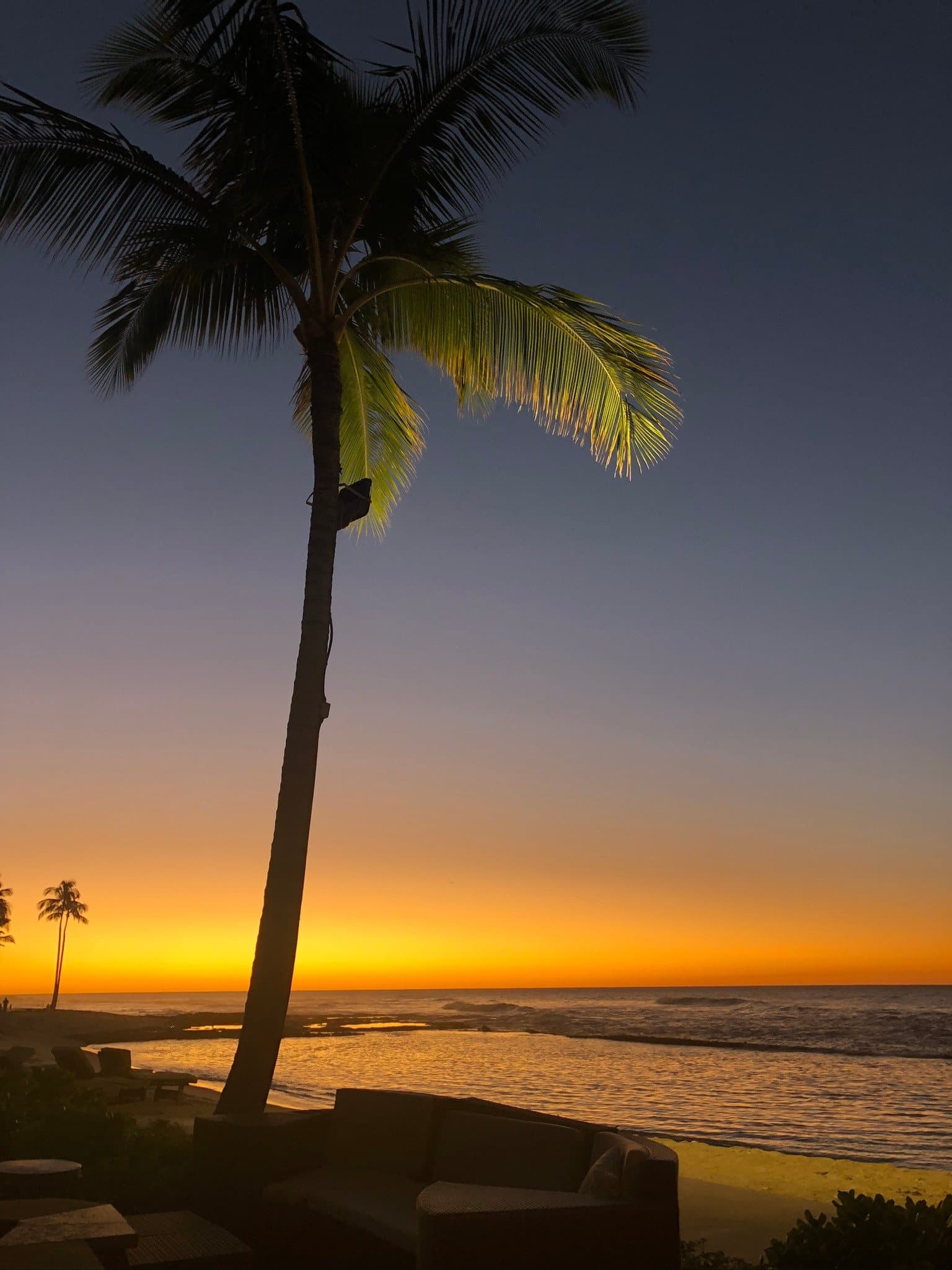
Kona Palisades sits on the slope north of Kailua-Kona, part of a cluster of neighborhoods above the highway that includes Kona Highlands, Kona Coastview and a dozen smaller subdivisions. What they share is position: a few minutes to downtown Kailua-Kona, to the airport, to Honokohau harbor, to schools and shopping, and a straight run north to the Kohala Coast beaches. The elevation gives ocean views over the lava fields and noticeably better air movement than town, without the cloud and rain of the upper slopes. Housing is largely single-family on ordinary residential lots, so it functions as everyday Kona rather than resort Kona. It is one of the more practical places to buy in the district for someone who actually works on the island. Sunsets from this slope are the compensation for a dry and open landscape.
Kohanaiki
Private club community on the shoreline south of the airport. Members-only golf, clubhouse and beach facilities.
Kohanaiki runs along the shoreline south of the airport and is the newest of North Kona’s private club communities. Like Kukio it is built around membership rather than a hotel, with a members-only golf course, a clubhouse, pools and beach facilities, all about ten minutes from Kona International Airport. Its shoreline is a surf and fishing coast rather than a swimming beach, and public shoreline access has been kept along it, which is part of how the community sits within the district. Homesites and houses are large and contemporary, and the architecture leans more modern than the older resorts up the coast. The setting is open lava with long ocean views and some of the best sunsets on the island. With Hualalai and Kukio it forms the top tier of the North Kona market.
Honokohau
The island’s small boat harbor and the center of its ocean life, beside Kaloko-Honokohau National Historical Park.
Honokohau is the island’s small boat harbor and the center of its ocean-going life, one of only three harbors on Hawaii Island. Almost everything that happens on the water in Kona leaves from here: charter fishing, dive boats, whale watching and the big billfish tournaments. Immediately alongside it is Kaloko-Honokohau National Historical Park, established in 1978 to preserve and interpret traditional Native Hawaiian activity, including the Honokohau Settlement, a National Historic Landmark archaeological site whose fishponds were once a hub of Hawaiian culture. The result is an unusual pairing, a busy working harbor next to one of the most significant cultural landscapes on the coast. The neighborhoods above take their name and much of their character from the harbor below. For anyone whose life revolves around the ocean, this is the practical center of North Kona.

Kailua-Kona
Ali‘i Drive, the pier and the historic town core, including Hulihe‘e Palace and Moku‘aikaua Church. Condominium inventory from studio to oceanfront.
Kailua-Kona is the second-largest settlement on the island after Hilo and the commercial center of its west side, with a population approaching twenty thousand. Kamehameha I established it as his seat of government when he was chief of Kona, and after he unified the archipelago in 1795 it served as the capital of the Kingdom of Hawaii before the capital moved to Lahaina and then Honolulu. That history is still standing on Ali‘i Drive: Hulihe‘e Palace, a royal residence, and Moku‘aikaua Church, the first Christian church built in the islands, sit near the pier. Today the town is the island’s tourism engine, and each October it hosts the Ironman World Championship, whose finish line is at Kamakahonu. Housing runs the full range from studio condominiums to oceanfront, which makes it the most liquid market in the district. It is hot, sunny, walkable in the core, and busier than anywhere else on this side of the island.
Holualoa
The coffee belt village above town on the Old Mamalahoa Highway. Galleries, studios and small working farms.
Holualoa sits in the coffee belt on the slope directly above Kailua-Kona, strung along the Old Mamalahoa Highway. The name means long sled course, after the holua slides that once ran down these slopes. It is the best known of the upland coffee villages and has become a genuine artists’ town, with galleries and studios occupying a short main street that has kept its old storefronts. The elevation puts it in the afternoon cloud, which is exactly the pattern that makes Kona coffee what it is: sunny mornings, cloud or rain in the afternoon, little wind, mild nights and porous, mineral-rich volcanic soil. Living here means being ten or fifteen minutes above the heat and noise of town, with a long view down over both and out to the water. Parcels are often small coffee farms rather than house lots, and many owners still take a crop off them.
Keauhou
Master-planned south of town. Golf, the shopping center, and a mix of single family and condominium.
Keauhou is the master-planned south end of Kailua-Kona, close enough to town to be convenient and far enough out to stay calm. Its history is substantial: Kamehameha III was born at Keauhou Bay, the Keauhou Holua Slide is a National Historic Landmark, and Kahalu‘u Bay just to the north is among the most used snorkeling and surf spots on the coast. The modern community gathers golf, a shopping center, resort hotels and residential neighborhoods into one planned area, with a mix of single-family homes and condominiums across a wide range of prices. It is greener than the lava coast north of town because it sits a little higher and catches more afternoon cloud. Shoreline access, a small boat ramp and the manta ray dive sites offshore give it a strong ocean orientation. For most buyers the decision comes down to Keauhou’s order and amenities against Kailua-Kona’s energy and walkability.